Friday, 29 April 2016

Drama Evaluation and Final Cut

Evaluation (Drama)

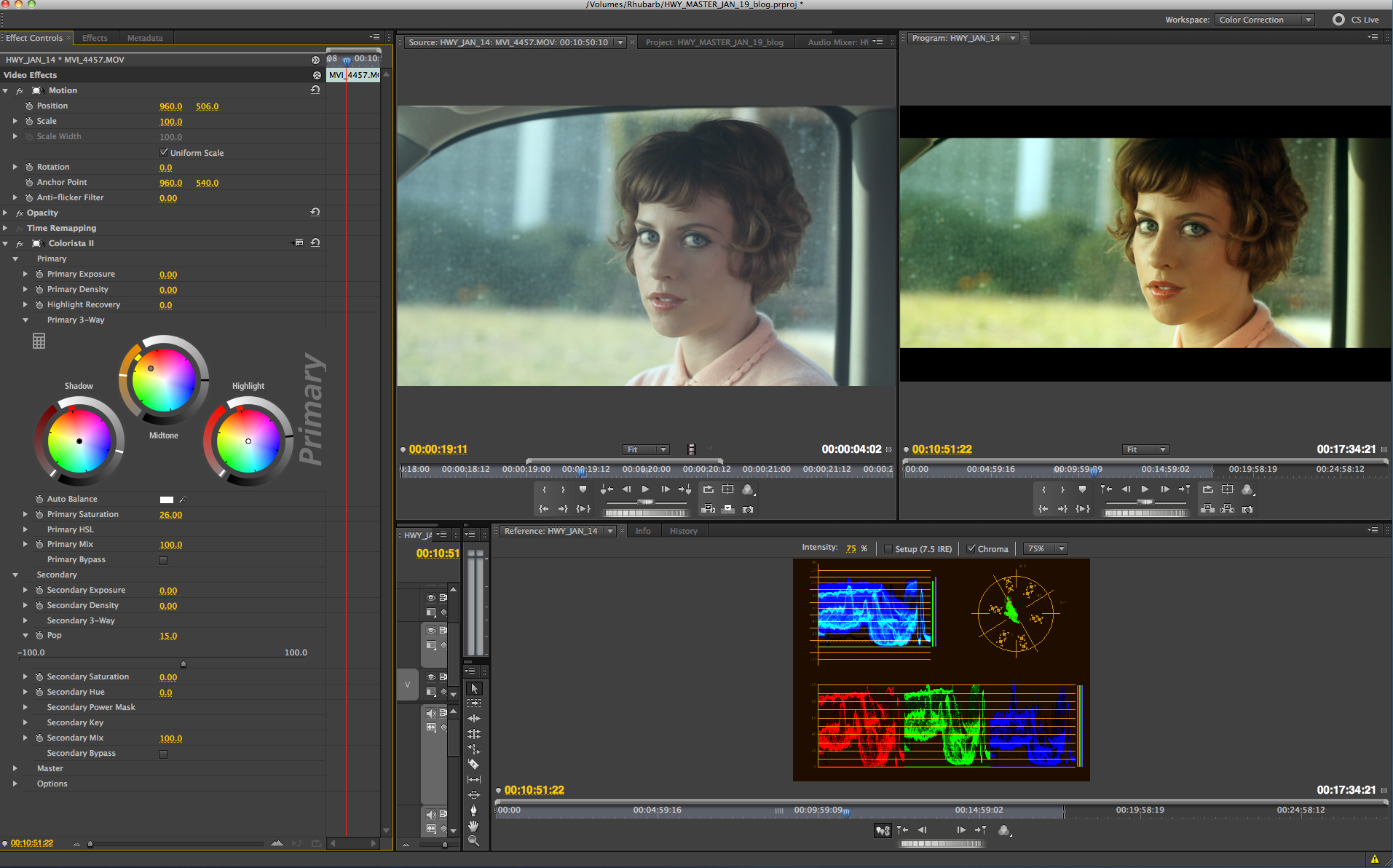
Before this module, I have worked on several of my own films but with a small production crew of two to three people. I knew how to frame a shot and how to use editors but this project put all my knowledge to the test. Working in a group of seven with specific roles was a good experience for me to work with a large group of people on the same projects. Delegating work depended on key roles, which helped me focus on my role and to get the best performance from myself, my crew and actors. This module gave me the chance to try directing, which I found difficult. During the middle of this production, me and phil decided that because he wrote the script and I have more knowledge on editing that we would divide the roles of director and editor between us when needed. Phil would brief the actors and I would direct them on their performance, in regards to editing I would focus my time on colour correction, colour grading, re-framing and visual effects for titles and credits. This make workflow twice as fast and effective on set and in post.

The first shoot on 13th April 2016 went well and we got some good shots. We edited the footage and after we created a rough cut and got feedback from our lecture, we did not get positive feedback so we discussed re-shooting. This disheartened the group but also gave us the mindset to make this film to the best of our abilities. We filmed the missing scenes on 27th April 2016 and we got some really good shots and performances from the actors and actresses. We then became ahead of schedule so we decided to redress the room and re-shoot the first two scenes we shot with better set design and lighting. After we got the footage in post, it was clear that re-shooting was the best idea we could have done as the footage came out perfect compared to the first shoot.

The film was a challenged to edit as we filmed the entire film and finished the basic structure and colour correction and colour grade in less than 16 hours. After Phil finished the final rough cut, Brody got to work on the sound design that included clean dialogue, background noise, sound effects and music which really blend all the elements of the film together and gave a professional feel to the film.

The film does have a few minor audio hiccups and the colour grade doesn't fully match in places due to the camera not being white balanced accurately in some shots, but overall the film came out better then we expected. Everyone worked extremely well together, the actors and actresses was amazing and done exactly what we wanted and this created a fast and smooth workflow. As stressful as this task has been, I have really enjoyed myself and I am extremely proud to what I would say is our best work yet.


Evaluation (Creative Development Project Realisation Module)

At the beginning of this module I had a basic understanding of Documentary and Drama film, but minuscule knowledge of experimental film. With Experimental film task I have learnt what a sound-scape is and the many approaches available for experimental film. I feel that the idea of mental health and the mental space of people with mental health was a very good subject to base the experimental on. I also feel that the technical approaches to my film was initially a good idea, although I feel that the execution of the technical approaches was slightly off the mark and decreased the quality of the overall product. This is also applied to the sound-scape for the film and has taught me to test ideas and research intensely before starting the main production.

In regards to the documentary task of this module, I feel I have learnt how to frame and light an interview accurately to create a well lit and composed mid shot. I also have learnt how to structure a documentary in terms of its narrative arch and how to deal with contributors on and off camera to a professional standard which will stay with me for the rest of my career. This task has also shown me the important to pay attention to sound; this is referring to the external non-synced sound and the backup of internal synced camera sound. The most important thing I have learnt from this task is to work with my group as professionally and fairly by sticking to roles and delegating the work accordingly to the roles of the crew. I have also personally learnt to take a step back and let my group grow via peer and self development on learning new skills.

For the final task, the drama, I have learnt the importance of time management. With an extremely short period of time to write, shoot and edit this production, I now know the impact team work, time management and dedication has on a production. We struggled to get actors at first but through expanding our connections to external casting agencies, we managed to find two actors that have been extremely flexible with the minimal time to shoot. This also creates further connections via word of mouth to other actors and actresses and has produced contacts for future projects. This project has been the biggest project of the module and year but the scale of the crew and sourcing external actors, alongside external locations separate to the university. I have also learnt to work with my group on a bigger scale; as my role was director, I had to co-ordinate the cast and crew through every shot and every line for the film to get the best shots and performance for the production. I found this particularly hard as I have never directed to this scale before, let alone properly. I now feel confident that I direct future projects with a wider understanding of the role and how it interacts with the other roles of the production team.

The Final Cut - The Stage [Short Drama]


The Stage [Short Drama] from Liam Atkinson on Vimeo.

Thursday, 21 April 2016

Feedback Reflection and Progress Update

Feedback Reflection

After our one to one meeting with our lecture in regards to the rough cut for our drama. We found that the background for the shots was to plain and needed better set design to create a realistic set for the mise-en-scene. This also counts for the lighting; the lighting differs from shot to shot and even though this problem is correctable in post, re-shooting would be a better solution in regards to the other problems.The actor and actress's performance was slightly stiff and very theatre styled. 


The conclusion to this one to one was to re-shoot these scenes with better set design, lighting and a more colourful performance from the actors.

Progress Update

After a group discussion, we decided to film the remaining scenes to finish the drama. We plan to shoot on 27th April 2016 at Francesca's house. We also plan to record the film non-sync and Brody will design ambient sound, sound effects, sound transitions and music to fit the scene and give the film a level of depth and emotion. If we become a head of schedule we will re-shoot scenes 2 and 4 with better lighting, set design and a better performance from actors and actresses.

Saturday, 16 April 2016

Drama Progress Update / Planning Documentation

Drama Progress


On 13th April 2016, our production crew filmed scenes 2 and 4 at our first location (Francesca's House) and partly filmed scenes 1 and 5 for the theatre shots at the Marvin Theatre. The shoot took around 6 hours starting at 10:30 am  and finishing around 4:30 pm. Here are some photos from behind the scenes.


Current Footage


After filming on the 13th April, we create a rough cut of the footage to show in our progress one to one meeting with out lecturer. The rough cut was a simple edit to show the order of the footage. The rough cut for this drama can be seen below.


The Stage Rough Cut from Phillip Cullen on Vimeo.

I also created a quick mock-up of the Letterbox Framing (Ratio 1.85:1), Colour Correction and Colour Grade. This is an example edit for the potential post-production factors for the final edit. This example can be seen below.


The Stages [CC & Frame TEST] from Liam Atkinson on Vimeo.


Production Documentation


(Each document was delegate to the crew member in the relevant production role.)

Thursday, 24 March 2016

Techinal Approaches for the Drama and Production Documentations

The technical approaches we plan to take towards this film will be shown through camera work and post- production. We aim to use intricate transitions via intense lens flares, over exposure sound design and using composition to make an actor seem still and the scene, time and location change. We will also plan to execute advance shots including tracking shots via the operation of a slider rig to create smooth tracking shots. Additionally we plan to film in 50fps (frames per second) to allow us to slow the footage to half speed and keep a smooth shot instead of a jumpy one.

In the terms of post-production, we will use the aspect ratio 1.85:1. This will make the matte suitable to fill a widescreen ratio screen. so when the film is played on a 16:9 screen, black lines will appear which is known as Letterbox ratio and makes the film seem more cinematic as most films are projected to a widescreen in the cinema. Initially we planned to set the aspect ratio as anamorphic, which is a super wide ratio of 2.35:1 but we decided to go wider with a 1.85:1 ratio as it shows more of the mise-en-scene with a wider yet tighter shot. In addition to this we will focus on colour correction and colour grading to correct the exposure of the footage and give a general tone via the semiotics of colouring within film. 

A screenshot taken from vashivisuals.com which talks
about the importance of Colour Correction and Colour Grading.

Wednesday, 16 March 2016

Drama Pitch Ideas

During this module we was asked to create pitches for two different short drama ideas.

Graffiti

The first idea we came up focuses round a piece of graffiti which intertwines three different narratives over three different timelines of three different people. This drama is a multi-narrative connection through time.

View Pitch Here


Memory loss

The second Idea we came up with was a drama that focuses around a professional actor that has memory loss due to a car crash. In this short we see the main protagonist struggle with internal issues such as, the death of his sister in the car crash and the struggle of trying to remember his lines for a big performance that will be a crucial point in his career.

View Pitch Here

Thursday, 10 March 2016

Drama, Film Analysis - About a Girl (2001)

The themes that run through 'About a Girl' (2001) directed by Brian Percival, are themes of neglect, child innocence and Independences. These themes are based around the main focus of the film, a young teen female and the struggles explained within her story and how she is confident she will make something of herself one day. The approach of this film is a simple one shot of a girl walking down a canal and selling the story to the audience as if we are walking with her down the canal. The one shot is broken up however with cutaways to back up her points. This gives the film a fictional documentary style approach to the narrative. The actress for the main protagonist is very believable in her performance, especially with the costume, dialect, accent and location. I really felt connected to the character and her story, which captured and held my attention from start to finish. 

I liked this film a lot due to the as I feel it portrayed the character extremely will in reflecting the themes in a believable and relatable way. The way the film is shot with a monologue to camera with relevant cutaways in a contemporary documentary style, which I would like to adopt for my future films.

Bibliography


  • About a Girl. (2001). [film] Directed by Brian Percival. UK: Silver Films

Thursday, 3 March 2016

Final Cut and Evalation

Under The Gun Documentary Final Cut


Under The Gun [Short Documentary] from Liam Atkinson on Vimeo.

Evaluation

Under The Gun is a 5 minute documentary about tattoos and the discrimination that comes with tattoos. The Documentary is shot well in terms of camera angles and lighting, edited well with good transitions between interviews and cutaways with good clear audio. The feedback we received and what I would give for this documentary would be to add some breathing space between audio to allow the audience to digest the information as well as create smoother transitions between audio by not speaking over the interviewee and allowing some space before and after the interviewee speaks to give room to edit smooth transitions between audio.

The process we took to this production was to research what idea we wanted to base the documentary on. Then we discussed the narrative options we wanted to take and scouted interviewees that could be in our production. Once we had our interviewees we planned interviews around the contributor’s schedules and then I shot the interviews as I was the cinematographer. The footage was then passed to Natalie that edited the footage with little help from the rest of the group to create the final cut of our production.

The issues we faced was simply technical such as; not turning the sound on the camera for a reference when syncing the non-synced sound, Avid crashing and not saving half the work Natalie produced twice and issues creating smooth transitions between audio as we did not leave enough space before and after the interviewee talking.

My usual role in a production would be the editor, but for this production I was allocated the role cinematographer. I feel that this was a good choice for me as it gives me a break from editing and to try something  I didn't feel was my norm role and practice my skills as a cinematographer. I took on this role with a strong professional idea of what I wanted to do; I wanted to create shots to professional standard with full lighting, the correct camera angles and use of tripods and sliders. I wanted to get a strong mod shot for interviews, tight close ups for cutaways and a smooth track shot with the use of a slider to give a more artistic and advance look to the production.

During this production I have learnt how to set the bit rate/resolution to 1920px x 1080px, 50mbp, 25fps, I also set the shutter speed to 1/50 as allows the right amount of light into the camera in regards of the frame rate with is a ratio of 1:2 (this would be 25fps to 1/50).

The group worked equally and fairly throughout the production. Harry was director, Carly was producer, Natalie was editor and Francesca was sound recordist/editor. Everyone worked to their best efforts and produced strong work within their roles. This made the production run smoothly and effective in reflection of the quality of the documentary. The strengths of the production is that we worked extremely well together and the documentary had a nice visual style with the credits and colour correction that gave the documentary as professional look. The weakness’ of the production was the problems with the sound and how it does not flow as cleanly as we planned.